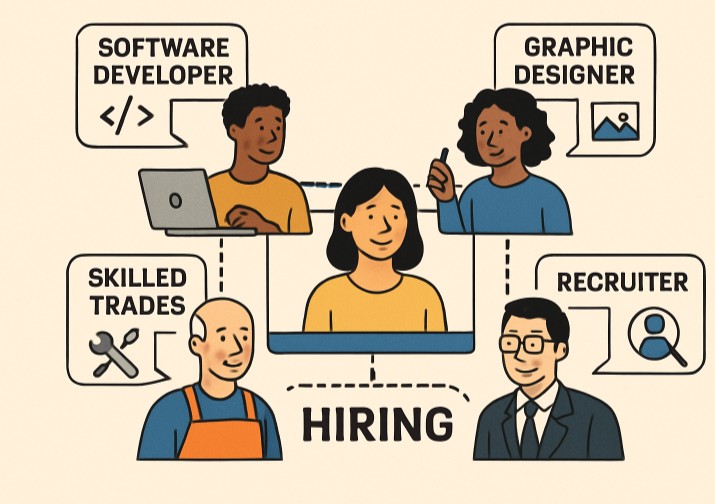
Organizations are embracing modern hiring methods to remain agile and appealing in a rapidly shifting employment landscape. As workplace trends and candidate expectations evolve, forward-thinking companies are moving away from legacy recruitment models toward more flexible, skills-driven, and inclusive approaches. Solutions like a hiring platform empower businesses to streamline processes and find top talent without bias, ensuring successful hiring outcomes amid intense market competition.
The stakes are higher than ever, with businesses competing for scarce talent and candidates prioritizing values, flexibility, and personal growth. To stay competitive and resonate with modern talent pools, organizations must innovate at every stage of the recruitment funnel. Adopting new technology and championing diversity initiatives are just a few strategies shaping the future of work culture and determining which companies attract and keep top performers.
Skills-Based Hiring
The rise of skills-based hiring marks a pivotal shift in recruitment. With nearly 85% of companies now adopting this approach, outdated requirements such as university degrees are often set aside in favor of practical skills and real-world problem-solving. This inclusive strategy broadens the applicant pool to include nontraditional candidates and career changers, allowing businesses to fill crucial roles faster and advance equity. Organizations prioritizing skills-based practices see measurable improvements in productivity and employee satisfaction.
Embracing Remote and Hybrid Work Models
Flexibility is no longer a perk; it’s a standard. Hybrid and remote work models allow organizations to attract a geographically diverse talent pool and support better work-life balance. Nearly 93% of employees in remote-capable roles want at least some form of remote work, while 88% of employers have integrated hybrid arrangements into their businesses. Remote work reduces overhead costs, increases employee satisfaction, and enables companies to be more resilient during economic or public health disruptions.
Leveraging AI and Automation in Recruitment
Harnessing automation and AI streamlines repetitive tasks such as resume screening, interview scheduling, and initial outreach. Advanced AI tools significantly accelerate application processing, up to 10 times faster than traditional methods by identifying qualified candidates and eliminating unconscious bias. Companies leveraging these technologies experience a 40% reduction in average time-to-fill and improvements in candidate quality. Automation is not only transforming recruitment but is also raising standards for accuracy and efficiency across the industry.
Prioritizing Diversity, Equity, and Inclusion
Building a diverse workforce is at the forefront of modern hiring philosophies. Companies now invest in crafting inclusive job descriptions, hosting diverse interview panels, and running outreach programs for underrepresented talent. Organizations with leading diversity, equity, and inclusion (DEI) policies demonstrate stronger performance, innovation, and adaptability. Inclusive leadership translates to improved employee engagement, reduced turnover, and a genuine sense of belonging, key to long-term organizational success.
Investing in Internal Mobility and Upskilling
Retaining talent and filling gaps internally is a cost-effective strategy gaining momentum. Through internal mobility initiatives and robust upskilling opportunities, companies empower employees to advance or shift roles without leaving the organization. Talent marketplaces match current staff to open positions based on skillsets and career objectives, while ongoing training pathways support retention and resilience. Investing in people not only addresses skills shortages but also fosters loyalty and deeper institutional knowledge.
Enhancing Candidate Experience with Technology
Simplifying and humanizing the hiring process boosts engagement and employer brand perceptions. Applicant tracking systems (ATS), automated updates, and chatbots keep candidates informed and valued throughout their journey, even outside regular business hours. Recent studies confirm that positive candidate experiences, driven by transparent and timely communication, directly impact offer acceptance rates and reputation. The seamless digital experience also ensures that top prospects remain engaged rather than abandon applications.
Adapting to Changing Candidate Expectations
Today’s workforce expects more than just a paycheck. Candidates look for flexible schedules, technical resources, wellness assistance, and workplaces that align with their values and career goals. Employers are responding with offerings such as four-day workweeks, wellness stipends, and mental health programs. Crafting attractive compensation and benefits packages is critical, but so is showcasing a positive culture and future-oriented development opportunities. Employers who ignore these shifts risk being left behind by a discerning, competitive talent pool.
Conclusion
In an era defined by rapid change, the organizations that thrive are those that evolve their hiring practices with the times. By embracing skills-based hiring, flexible work models, AI-driven recruitment, DEI investments, employee development, and technology-driven candidate engagement, businesses can build agile, high-performing teams. Proactive adaptation to both market and employee expectations is the linchpin for retaining today’s best talent and future-proofing organizational success.