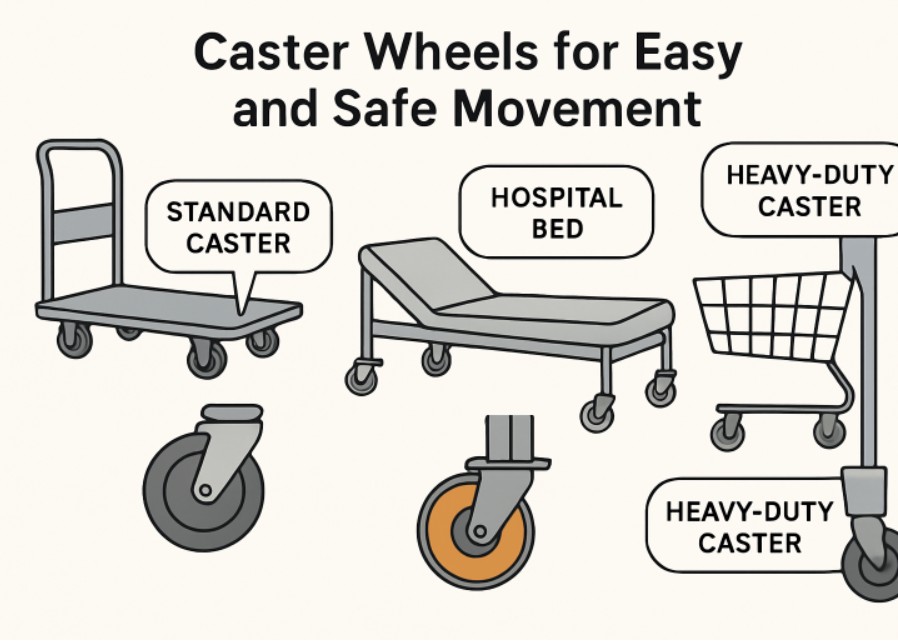
Casters are essential tools that improve the efficiency and safety of material handling in various industries. Over the years, their designs have evolved to meet the ever-changing demands of warehouses, factories, hospitals, and retail settings, offering new levels of reliability and performance. Whether supporting heavy machinery on a factory floor or offering easy maneuvering for shopping cart casters, these versatile wheels play a pivotal role in streamlining workflows and reducing the risk of injury.
The integration of advanced materials and refined designs in casters has enhanced both operational speed and worker well-being. Choosing the right caster and properly maintaining it are vital for a smooth-running workplace, helping businesses avoid unnecessary disruptions. Industry-specific solutions and a growing focus on sustainability further drive innovation in caster manufacturing, providing precise solutions to unique challenges across material-handling environments.
Advancements in Caster Technology
Contemporary casters are engineered from resilient materials such as polyurethane and thermoplastic elastomers, delivering durability and consistent, smooth movement. Many of today’s top-performing casters feature precision bearings, reducing friction and enabling effortless rolling even with substantial loads. These technological advancements enable materials to be transported efficiently and safely, especially in settings that require constant movement or repositioning of heavy goods. The implementation of quiet, non-marking wheels also supports environments that require reduced noise and floor protection, thereby improving workplace conditions.
Ergonomic Designs for Worker Safety
Innovative ergonomic features are at the core of modern caster design, reducing the physical burden on staff and minimizing the risk of workplace injuries. For example, advanced caster systems reduce the push-and-pull force required, often by as much as half, compared to outdated versions. Swivel and directional locks allow precise movement and greater control in restricted spaces, improving productivity and helping protect against musculoskeletal injuries.
Industry-Specific Caster Solutions
Each industry presents its own set of challenges and demands for equipment mobility. As a result, there is a growing trend toward providing custom solutions tailored to specific sectors. For instance, food processing and pharmaceuticals often require casters made with stainless steel and hygienic finishes that withstand frequent washdowns and exposure to corrosive cleaning agents. On the other hand, heavy manufacturing might require shock-absorbing wheels for stability on uneven surfaces, while hospitals often seek antimicrobial casters to maintain sanitary standards. The wide variety of available specialty casters means there are dedicated solutions for virtually any application in the material handling sector.
Reducing Downtime with Proper Caster Selection
Downtime due to equipment failure can be remarkably costly for any operation. Choosing the correct caster for the load capacity, working environment, and frequency of use is critical to minimizing these interruptions. High-quality casters designed for easy maintenance and part replacement lower the risk of unexpected breakdowns. This results in smoother operations, reduced maintenance costs, and enhanced workplace safety. According to a report by IndustryWeek, preventive maintenance and proper equipment selection are vital to continuous manufacturing processes, underscoring the value of informed caster selection.
Enhancing Mobility in Tight Spaces
Efficient use of floor space is a priority in warehouses, hospitals, and similar settings where every square foot matters. Air casters and other omnidirectional wheel systems have revolutionized movement in tight or crowded spaces, enabling workers to reposition large equipment with minimal effort. These solutions benefit both productivity and safety, as heavy loads can be moved with precision control and reduced physical strain. The ability to easily maneuver items around obstacles or corners is especially valuable in environments where flexibility and adaptability are essential.
Sustainability in Caster Manufacturing
Growing environmental awareness is reshaping the way casters are made. Many leading manufacturers are now integrating recycled and bio-based materials into their products, along with modular designs that make it easy to replace components rather than disposing of an entire caster. This sustainable approach decreases landfill waste and reduces the overall environmental footprint of operations. Moreover, customers are increasingly seeking out products that align with their own sustainability goals, making eco-friendly casters a smart investment for the future.
Final Thoughts
Casters are key to transforming and optimizing material handling processes. Continued advancements in caster technologies ensure that facilities benefit from greater safety, efficiency, and environmental responsibility. Selecting the right caster solution and staying abreast of industry innovations can deliver substantial returns in workflow improvements and cost savings across a wide range of businesses.