Sooner or later, many borrowers find themselves with money they didn’t expect. An annual bonus comes in bigger than last year’s. An FD matures. A relative repays an old loan. The obvious move is to clear the personal loan and be done with the EMIs.
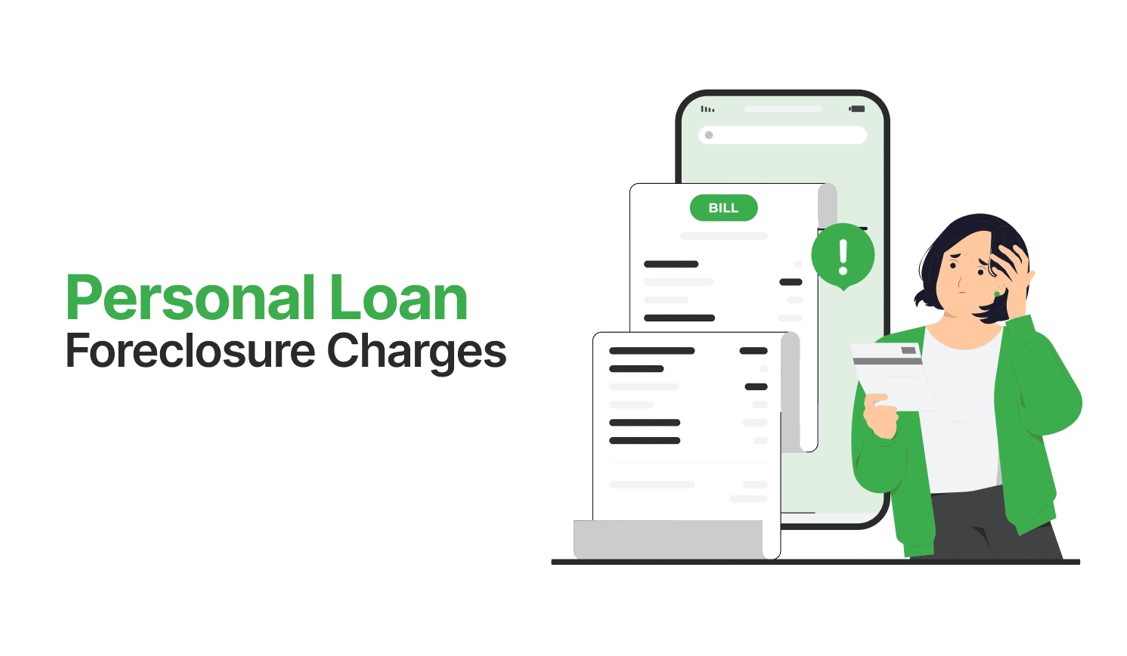
Often that’s the right call. But closing early has a price, and whether it saves you anything depends on two numbers most people never check: the personal loan foreclosure charges in the agreement, and how far into the tenure the loan already is. Platforms like Prefr disclose these charges upfront, and it’s worth reading them before you ring the lender.
Foreclosure and part-prepayment are different things
Foreclosure means paying off the entire outstanding balance in one go and closing the account. Part-prepayment means paying a lump sum on top of your regular EMIs to bring the balance down, while the loan stays open. Depending on the lender, a part-prepayment either shortens the remaining tenure or lowers the EMI.
Both usually carry a fee, and the two fees aren’t always the same. Personal loan prepayment charges, in particular, sometimes come with conditions, such as a minimum number of EMIs paid before the lender will accept one, or a cap on how much you can prepay in a year.
What lenders charge
Most personal loans are fixed-rate, and for fixed-rate loans, lenders are allowed to charge for early closure. The charge is typically a percentage of the outstanding principal, with 18% GST added on top. It’s set out in your loan agreement and in the Key Fact Statement you received before signing.
On loans taken through Prefr instant cash loan provider, the charge depends on the lending partner, and the range for personal loan foreclosure charges runs from 0% to 5% of the outstanding principal. Some loans carry no charge at all, so check your own agreement before assuming the worst.
One exception is worth knowing. RBI’s digital lending rules give you a cooling-off period right after disbursal. If you change your mind within that window, you can return the loan by repaying the principal and the proportionate APR, and no foreclosure penalty applies. Your KFS states the exact length of the period.
When closing early pays off, and when it doesn’t
Here’s where the timing matters. EMIs are front-loaded with interest: in the early months, most of each payment goes to interest, and by the end almost all of it goes to principal. So the interest you avoid by closing early shrinks every month.
Take a ₹3 lakh loan at 20% over 36 months, with an EMI of ₹11,149 and a 4% foreclosure charge.
| Close after | Balance to pay | Interest you avoid | Charge (4% + GST) | You save |
| 12 months | ₹2,19,057 | ₹48,521 | ₹10,339 | ₹38,182 |
| 30 months | ₹63,159 | ₹3,735 | ₹2,981 | ₹754 |
| 32 months | ₹42,798 | ₹1,798 | ₹2,020 | You lose ₹222 |
In the first year, foreclosure saves close to ₹40,000 even after the charge. Near the end, the charge can outweigh the interest you’d skip. At that point, it makes more sense to keep paying the EMIs and put the lump sum somewhere else. You can see your own outstanding balance and loan details in the Prefr personal loan app on app stores before deciding.
Doing the sum yourself
A personal loan closure calculator does exactly what the table above does, and you can work it out on paper if your lender doesn’t offer one.
First, find your outstanding principal. It’s on your latest loan statement, or you can ask the lender for a foreclosure letter, stating the exact amount payable on a given date. Next, add up the EMIs you still have left and subtract the outstanding principal. What remains is the interest you’d avoid. Then work out the charge: outstanding principal multiplied by the foreclosure percentage, plus 18% GST. If the interest you avoid is clearly bigger than the charge, closing early makes sense.
A personal loan prepayment calculator works the same way for a partial payment. The one difference is that you’re comparing the interest saved on the amount you prepay, not on the whole balance.
How does the foreclosure process usually work?
Contact your lender, or use the service option in the app, and ask for a foreclosure statement. It will show the outstanding principal, any interest accrued since your last EMI, the foreclosure charge, GST, and the date until which the figure is valid. Pay the amount through the method the lender specifies before that date.
Afterwards, two things matter. Make sure your e-mandate is cancelled so that no further EMIs are debited. And ask for a No Objection Certificate (NOC), confirming the loan is closed. Keep it safe, then check your credit report after a month or two to confirm the account shows as closed and not just “active with zero balance”. A loan that still looks open can hold your score back when you next apply.
If you’re choosing a loan now
The time to think about closing a loan early is before you take it. If there’s a real chance a bonus or an FD will arrive midway, look at the foreclosure terms as closely as the interest rate.
Prefr works with RBI-registered lending partners including Aditya Birla Capital, Poonawalla Fincorp and SMFG India Credit.
| Detail | What Prefr offers |
| Loan amount | ₹51,000 to ₹5 lakh |
| Tenure | 6 to 60 months |
| Interest rate | 18% to 30% a year, depending on your profile |
| Foreclosure charge | 0% to 5%, depending on the lending partner |
| Who can apply | Age 21–55, salaried or self-employed |
The full terms, including the eligibility criteria and the range of personal loan foreclosure charges, are on Prefr’s personal loan page.
The bottom line on closing early
Early in the loan, foreclosure almost always saves money. Late in the loan, it often doesn’t. Five minutes with your statement and a calculator will tell you which side of that line you’re on.