
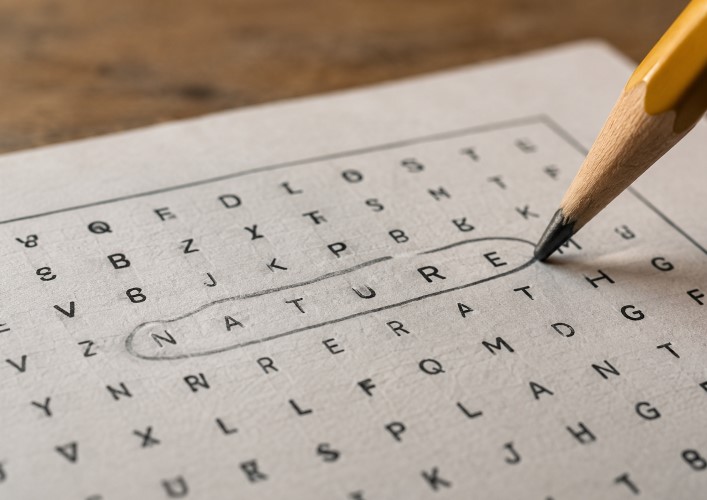
Word search puzzles offer a simple way to step away from alerts, feeds, and open tabs without needing a complicated hobby. Whether someone prefers a single printable page or a collection of crossword books, the basic appeal is the same: find a list of words, mark visible progress, and enjoy a clear finish line.
They are also flexible. A word search can fill ten quiet minutes during a wait, become part of a classroom review, or give family members an easy activity to share. It is not necessary to give up screens entirely. The value comes from making room for an occasional focused, low-tech break.
Why Screen-Free Activities Matter
Phones and computers are useful tools, but they also make it easy to switch tasks repeatedly. A paper puzzle creates a contained activity with no pop-ups and no need to decide what to open next. Like reading, drawing, journaling, or playing a board game, a word search can create a small pocket of undivided attention during a busy day.
How Word Searches Engage the Mind
A word search asks the solver to locate listed words in a grid of letters. Words may run across, down, backward, or diagonally. The process draws on visual scanning, selective attention, pattern recognition, working memory, and language recall. For example, a traveler can keep a small puzzle book in a bag and use it during a delayed appointment instead of automatically reaching for a phone.
What Research Says
It is important to be careful about health claims. A 2019 study of 19,078 cognitively healthy adults ages 50 to 93 found that people who reported doing word puzzles more often also performed better on several cognitive measures. Because the research was observational, it cannot show that puzzles caused those differences. People who enjoy word puzzles may also differ in other habits, education, health, or lifestyle factors.
That distinction matters. Word searches can be mentally engaging, but they are not a treatment for memory problems and should not be presented as a way to prevent dementia. Enjoyment and consistency are more realistic goals than promises about medical outcomes.
Word Searches and Vocabulary Practice
Themed word lists can turn a puzzle into a gentle vocabulary exercise. A science puzzle may introduce terms such as habitat or molecule, while a geography puzzle may reinforce place names. Parents, teachers, and independent learners can extend the activity with a short routine:
- Find the word in the grid.
- Read and spell it aloud.
- Discuss its meaning.
- Use it in a sentence or connect it with a related word.
Building Focus Without Making It Feel Like Work
A puzzle gives attention a specific target and a visible sense of progress. Start with five or ten minutes, keep the phone out of reach, and use good lighting. Some solvers like to scan every row from left to right before checking columns and diagonals. Others begin with the longest or most distinctive words. Either approach is fine if it feels calm rather than frustrating.
Choosing Puzzles for Different Ages and Needs
Children
Use large letters, familiar words, and topics tied to current interests or lessons. Working with a partner can make an unfamiliar puzzle less intimidating.
Adults and Older Adults
Choose a mix of easy and challenging pages to keep the activity enjoyable. Clear print, strong contrast, comfortable seating, and breaks for tired eyes can make a major difference. Anyone with new or concerning changes in vision, memory, or hand control should seek advice from an appropriate health professional.
How to Build a Simple Puzzle Routine
- Choose a regular cue: Try a coffee break, after-school time, or a quiet evening.
- Set a small goal: Solve for ten minutes or find five words.
- Reduce distractions: Clear the surface and silence notifications.
- Track what works: Note favorite themes, new words, or preferred difficulty.
- Rotate activities: Mix puzzles with reading, walking, music, crafts, or conversation.
Turning Puzzles Into a Shared Activity
Word searches do not have to be solitary. Family members can solve the same page together, take turns finding words, or make themed word lists for one another. A friendly timed challenge can add energy, but speed does not need to be the point. Conversation, cooperation, and a satisfying finished page are often more rewarding than competition.
Common Mistakes to Avoid
- Starting too hard: An overly difficult first puzzle can discourage a new solver.
- Chasing speed: Fast completion is optional, not a measure of value.
- Ignoring comfort: Tiny print, poor light, and awkward posture can create avoidable strain.
- Making medical promises: Puzzles are recreation and mental engagement, not medical care.
Common Questions About Word Search Puzzles
Are word searches good for the brain?
They involve attention, visual searching, and word recognition. Research on word puzzles is encouraging but does not prove that word searches by themselves improve long-term brain health.
Can word searches help children learn new words?
They can reinforce spelling and recognition, especially when an adult or teacher talks about each word’s meaning after it is found.
Are paper puzzles better than digital puzzles?
Neither format is automatically better. Paper provides a screen-free option, while digital versions may offer convenience or adjustable display settings. The better choice is the one a person can use comfortably and enjoy regularly.
Final Thoughts
Word search puzzles remain useful because they are portable, approachable, and easy to adapt. They can support quiet focus, vocabulary review, and shared time without making big promises. For a well-rounded approach to healthy aging, the habits that support cognitive health also include physical activity, social engagement, and attention to overall health. A puzzle is simply one pleasant way to keep a routine varied and mentally active.