
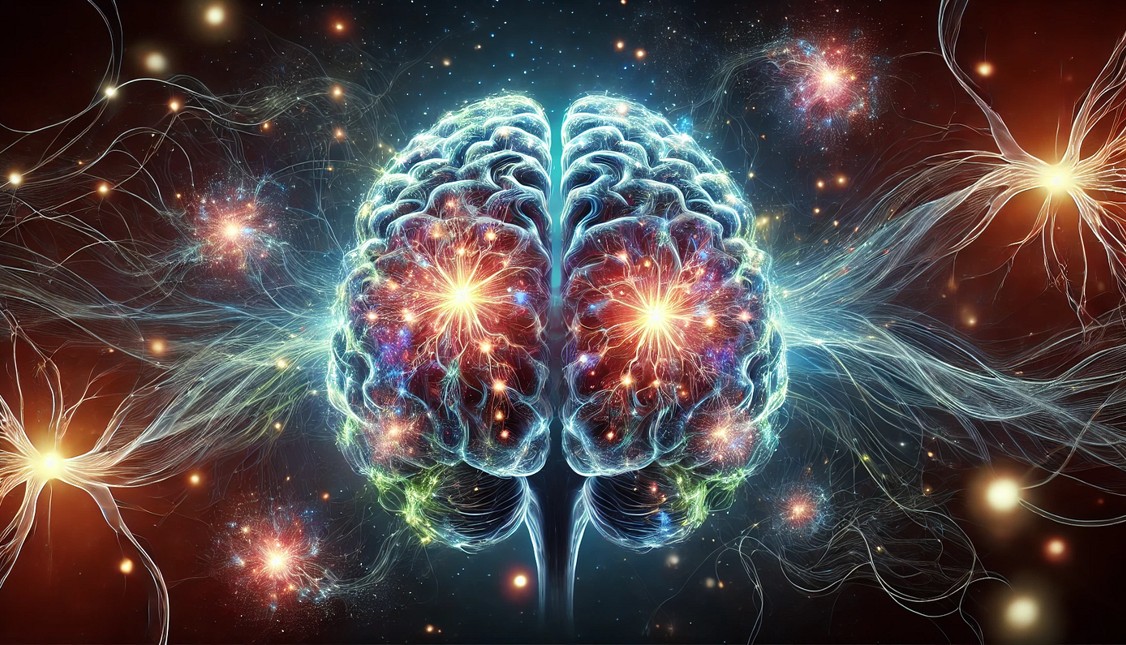
A neuroscientist once made a simple but revealing statement after years of studying the brain. He could track neural activity in real time, map decision-making patterns, and measure emotional responses. But there was still one thing he could not fully explain.
The experience itself.
Science has made major progress in understanding the brain. It can observe signals, identify regions, and analyze behavior. But the inner experience of being aware remains only partly understood. That gap is now drawing serious attention.
The question is no longer whether consciousness matters. The question is how it works.
The Limits of Brain-Based Explanations
Modern neuroscience has mapped large portions of the brain. Functional MRI scans show which areas activate during memory, emotion, and problem-solving. Researchers can even predict certain decisions based on brain activity.
Studies show that meditation can change the brain in measurable ways. Research has found increased cortical thickness in areas linked to attention and emotional regulation. Activity in the amygdala, the brain’s stress center, decreases with consistent practice.
The brain also shows plasticity. It adapts. Repeated thought patterns strengthen certain neural pathways. Over time, habits of thinking become physical structures.
But these findings lead to a deeper question.
If brain activity explains behavior, what explains awareness itself?
Why does experience feel the way it does?
That question is still open.
Consciousness as an Active Force
Traditional models often treat consciousness as a byproduct of the brain. Neurons fire, and awareness appears.
A growing number of researchers are beginning to question that assumption.
There is increasing interest in the idea that consciousness may not be passive. It may influence brain activity rather than simply result from it.
Attention offers a clear example. When attention shifts, brain patterns change. Focus strengthens certain pathways. Distraction weakens them.
This suggests that awareness plays a role in shaping the system.
Consciousness may be part of the feedback loop, not just the output.
Meditation and Measurable Change
Meditation has become one of the most useful tools for studying this relationship.
It allows researchers to observe changes in awareness under controlled conditions. Participants train attention, reduce mental noise, and stabilize perception.
The results are consistent.
Short-term meditation has been linked to improved neural efficiency and increased connectivity between brain regions. Long-term practitioners show greater emotional regulation and reduced stress responses.
Some studies report that even one week of intensive meditation can produce measurable shifts in brain function and immune signaling.
These changes are not theoretical. They are observable.
When awareness stabilizes, the brain reorganizes.
Experience and Science Begin to Align
Reports from experienced meditators often describe similar patterns. As mental activity settles, perception becomes clearer. Time feels less pressured. Decisions feel more direct.
Neuroscience offers a parallel explanation. Reduced activity in the default mode network leads to less self-referential thinking. Increased coherence across brain regions supports clarity and focus.
What was once described in spiritual language is now being mapped in scientific terms.
This alignment is closing a long-standing gap.
A Bridge Between Disciplines
This is where thinkers like Taansen Fairmont Sumeru are often referenced. His work focuses on the relationship between inner awareness and outer systems. He has emphasized that clarity in consciousness leads to clarity in action.
That perspective is now being echoed in research.
Psychology, neuroscience, and even physics are beginning to explore the role of the observer. Attention, perception, and awareness are no longer treated as side effects. They are becoming central variables.
The separation between inner experience and external measurement is narrowing.
Why This Shift Matters
Every system in society depends on human decision-making.
Finance, education, healthcare, and governance all rely on perception and judgment. When thinking is distorted by stress or fear, outcomes reflect that distortion.
Research shows that chronic stress reduces cognitive flexibility. It narrows attention and increases reactive behavior. Calm states produce the opposite effect. They support long-term thinking, problem-solving, and cooperation.
If consciousness can be trained and stabilized, it becomes a practical advantage.
Better awareness leads to better decisions.
That has implications far beyond personal development.
The Next Phase of Scientific Inquiry
Science has moved through distinct stages.
First, it focused on the physical world. Matter, energy, and motion.
Then it expanded into biology. Life systems, genetics, and ecosystems.
Now it is turning toward the observer.
The study of consciousness is emerging as a serious field. Brain imaging, behavioral studies, and attention research are providing new tools.
At the same time, practices like meditation offer repeatable methods for altering awareness.
The combination creates a new kind of inquiry.
Consciousness is no longer abstract. It is being studied in structured, measurable ways.
A Different Kind of Exploration
Exploration has traditionally meant looking outward. New lands, new technologies, new discoveries.
This shift moves inward.
Attention becomes the instrument. Awareness becomes the field of study.
The goal is not escape. It is refinement.
When perception becomes clearer, interpretation improves. When interpretation improves, action becomes more effective.
This creates a direct link between inner development and external results.
Where It Leads
There is still much that is unknown. Science is evolving. The models are incomplete.
But one trend is clear.
Consciousness is no longer being ignored.
It is being examined, tested, and measured.
The more the brain is understood, the more questions arise about the nature of awareness itself.
That tension is productive.
It drives inquiry forward.
What was once dismissed as subjective is now part of the conversation.
What was once considered separate from science is becoming part of its frontier.
And that frontier may reshape how progress itself is defined.