
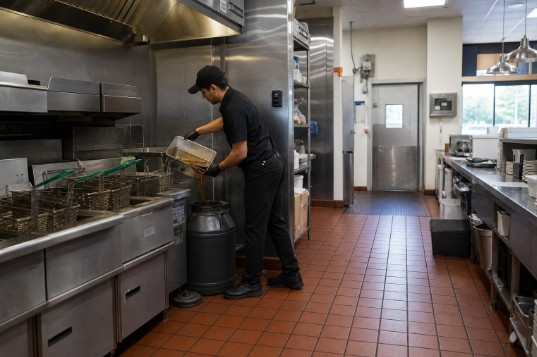
Used cooking oil is an unavoidable part of many restaurant, cafeteria, hotel, and food-service operations. It can also become a manageable resource rather than a back-of-house headache when a kitchen uses safe transfer methods, protected storage, and a dependable pickup plan. For operators building or improving that system, more information can help clarify how professional used cooking oil recycling programs fit into everyday kitchen operations.
The goal is not simply to get oil out of the fryer. A well-run process protects employees from burns and spills, keeps oil away from drains, and preserves a cleaner material stream for recovery. Small habits, such as closing container lids and keeping water out of the oil, can make the entire routine safer and easier to manage.
Why Used Cooking Oil Deserves a Better End Point
Cooking oil changes during repeated heating and food preparation. Once it is no longer suitable for frying, it still needs careful handling. Sending it down a drain can create plumbing problems because fats, oils, and grease can cling to pipe surfaces, capture debris, and contribute to blockages over time.
Commercial kitchens may produce enough used oil that improvised disposal becomes inefficient and risky. Open buckets, poorly placed containers, and unclear staff responsibilities can lead to leaks, odors, pests, and slippery walking surfaces. Treating the oil as a separate recoverable material gives the kitchen a practical alternative to treating it as ordinary waste.
What Happens After Oil Leaves the Kitchen?
In the recovery industry, used fryer oil is often called yellow grease. The term generally refers to recovered cooking oil, while grease-trap material is commonly handled as a different and more contaminated stream. Although procedures vary by collector and processor, the path from kitchen to reuse commonly follows several steps.
- Fryer oil is allowed to cool and is transferred into an appropriate storage container.
- A collection partner removes the material on a scheduled or as-needed basis.
- At a processing facility, moisture, food particles, and other impurities may be separated from the oil.
- The cleaned material is evaluated for quality and directed toward a suitable end use.
- Depending on processing capability, regulations, and market demand, it may become feedstock for fuel or other industrial products.
How to Store Used Cooking Oil Safely
Safe storage begins at the fryer. Hot oil can cause serious burns, so staff should follow the kitchen’s equipment instructions and allow oil to cool sufficiently before moving it. Transfer should happen with tools and containers designed for the task, rather than with unstable, improvised vessels.
- Use a sturdy container with a secure lid and enough capacity for the expected oil volume.
- Place the container on a level surface, away from doors, traffic lanes, vehicles, and heat sources.
- Keep the lid closed whenever oil is not actively being added.
- Label the container clearly so employees do not mistake it for a trash, chemical, or grease-trap receptacle.
- Inspect the container and surrounding area regularly for leaks, loose fittings, or signs that it is approaching capacity.
Water is especially important to avoid. Rain entering an outdoor bin, wet utensils, or wash water added during cleanup can lower material quality and complicate later processing. Cleaning chemicals, cardboard, and general trash should also stay out of the collection container.
Common Mistakes That Lower Recovery Value
The most preventable problems occur when separate waste streams are mixed together. Used fryer oil is typically easier to recover when it remains as clean and dry as possible. Kitchen teams should avoid mixing it with grease-trap waste, mop water, sanitizer, food packaging, or large amounts of food debris.
Other common mistakes include leaving lids open overnight, overfilling the container before arranging service, and placing storage bins where they can be struck by carts or delivery activity. These issues can create a cleanup burden and may affect whether collected material can be processed efficiently.
Used Cooking Oil and Renewable Fuel
Recovered oil can be a feedstock for biodiesel and renewable diesel pathways after suitable processing. It is important not to assume that every gallon will have the same destination. Final use depends on the oil’s condition, the capabilities of the processor, applicable requirements, and available markets.
One example shows the practical potential of this approach. In its waste-reduction success stories, the Disneyland Resort collected used cooking oil for conversion into biodiesel used in certain attraction vehicles. For commercial kitchens, the central lesson is straightforward: consistent collection can move a material away from disposal and toward a productive recovery pathway.
How a Kitchen Can Build a Simple Collection Routine
- Assign responsibility for checking the oil container during each shift or closing routine.
- Keep the route from the fryer to the storage point clear, dry, and free of trip hazards.
- Record approximate fill levels after unusually busy service periods.
- Set a pickup trigger before the container reaches its maximum safe capacity.
- Train employees on transfer procedures, spill response, and who to notify if equipment is damaged.
A written checklist is useful because it makes the process repeatable across shifts. It also gives managers a way to identify recurring issues, such as containers filling faster during seasonal events or food debris entering the oil during a particular cleanup step.
Questions to Ask a Collection Partner
- Which types of used cooking oil are accepted, and what contaminants are prohibited?
- What container type, placement, and access route are recommended for the property?
- How are regular, emergency, and missed pickups handled?
- What should staff do if water, excess solids, or another contaminant enters the container?
- Are collection records, weight tickets, or service confirmations available?
- Who is responsible for addressing a spill or damaged storage container?
Frequently Asked Questions
Can used cooking oil go down the drain?
No. Oil should be collected through an approved storage and recovery process rather than poured into sinks, floor drains, or outdoor drainage areas.
Can water be mixed with used cooking oil?
It should be avoided. Water can reduce the quality of the collected material and create handling difficulties during storage and processing.
How often should oil be collected?
The appropriate schedule depends on cooking volume, container size, site access, and seasonal demand. Reviewing fill levels regularly helps prevent overflow.
Conclusion
Used cooking oil does not need to end as a messy disposal problem. By cooling it safely, storing it in a sealed and clearly labeled container, preventing contamination, and arranging reliable collection, commercial kitchens can protect their plumbing and work areas while supporting a more circular use of resources. The best system is usually the one employees can follow consistently, even during the busiest service periods.