
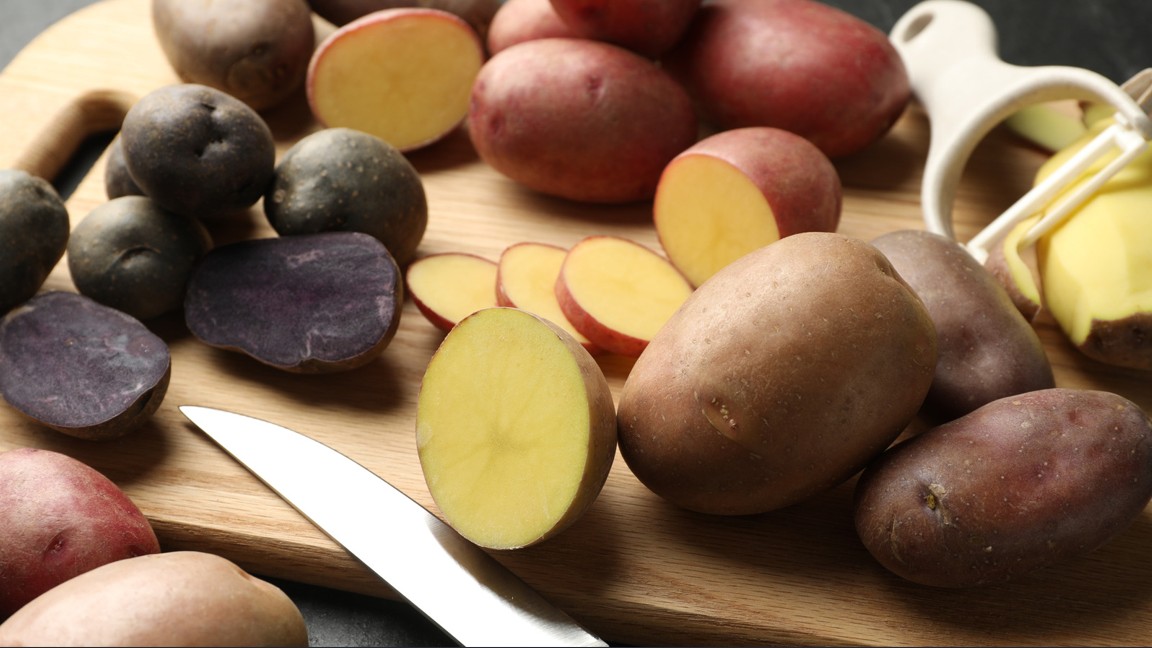
Potatoes may look like a simple kitchen ingredient, but their behavior during cooking can vary considerably. One potato may become beautifully crisp when roasted, while another stays moist and firm. Some varieties produce exceptionally fluffy mashed potatoes, while others create a denser, smoother texture. These differences are largely influenced by starch, moisture, sugar, and cell structure. Understanding these characteristics can make it easier to select the right potato for a particular cooking method.
Starch Determines More Than Texture
One of the biggest differences between potatoes is their starch content. High starch potatoes generally contain less moisture and have a dry, floury texture after cooking. Their cells separate relatively easily, which makes them particularly suitable for dishes where a fluffy interior is desirable.
Lower starch potatoes usually contain more moisture and maintain their structure better during cooking. Instead of becoming fluffy and crumbly, they tend to remain smooth and firm. This characteristic makes them useful for dishes where individual pieces need to hold their shape.
Instead of requiring just one type of potato to handle every culinary task, the wide variety of potato varieties offered gives cooks more control over the final texture of a meal.
Browning Depends On Natural Chemistry
The attractive golden surface of roasted or fried potatoes is not created by heat alone. Browning is influenced by reactions involving naturally occurring sugars and amino acids when potatoes are exposed to sufficiently high temperatures.
Sugar levels can vary depending on potato type, maturity, and storage conditions. Potatoes stored at very cold temperatures may convert some of their starch into sugars. As a result, they can brown more rapidly during frying or roasting and may become darker than expected.
Preparation also matters. Rinsing cut potatoes can remove some surface starch, while thoroughly drying them before cooking reduces excess moisture that might otherwise interfere with browning.
Why Some Potatoes Become Crispier?
A crisp exterior requires moisture to leave the potato’s surface efficiently during cooking. This is one reason potatoes with relatively high starch and lower moisture levels often perform well when frying, baking, or roasting.
As water evaporates, the exterior becomes increasingly dry. Surface starch can then contribute to the formation of a crisp shell. Meanwhile, the interior can remain light and fluffy, producing the contrast associated with well-prepared fries and roasted potatoes.
Cut size also influences this process. Smaller pieces have more exposed surface area relative to their interior, creating additional opportunities for browning and crispness. Crowding a baking sheet, however, can trap steam and work against the desired crispy texture.
Creaminess Comes From A Different Balance
The qualities needed for crisp potatoes are not always identical to those needed for creamy dishes. When preparing mashed potatoes, cooks generally want a tender texture without excessive gumminess.
High starch potatoes can absorb butter and dairy effectively and produce light, fluffy results. However, aggressive mixing can rupture too many starch cells and create a sticky texture. Using a potato masher or ricer and avoiding excessive stirring can help preserve a pleasant consistency.
Medium starch varieties offer another possibility. Their balance of moisture and starch can produce mashed potatoes that feel rich and creamy rather than especially fluffy.
Firm Potatoes Have Their Own Advantages
Low starch, waxy potatoes behave differently because their cells tend to remain together during cooking. This makes them valuable for potato salads, soups, stews, gratins, and other recipes where maintaining a recognizable shape is important.
Their naturally moist texture can also create a creamy sensation without the potato actually breaking apart. In layered dishes, this firmness allows slices to become tender while maintaining enough structure for attractive serving.
Matching The Potato To The Cooking Method
Good potato cookery begins before the oven is heated or the pan reaches the stove. Selecting a potato according to its cooking characteristics can significantly improve the finished dish.
High starch potatoes are often suited to baking, frying, and fluffy mashing. Waxy potatoes are generally useful when firmness is important, while medium starch types provide versatility for cooks who want a balance between the two.
Ultimately, browning, crispness, and creaminess are closely connected to the natural composition of the potato. Understanding how starch, moisture, sugars, and preparation techniques interact makes it easier to achieve consistent results and choose potatoes according to the texture a recipe actually requires.