
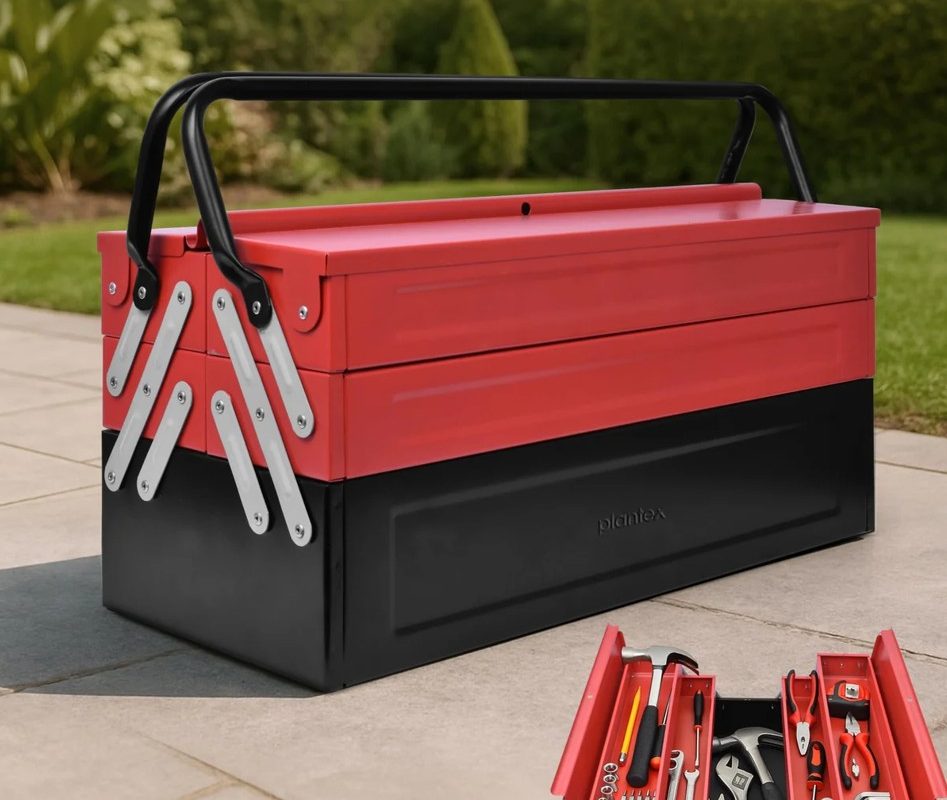
Tool storage plays an important role in maintenance, engineering and workshop environments. A well-designed storage case does more than keep tools together. It protects equipment from impact, supports organized workflows and makes tools easier to transport between workstations or job sites.
Modern 工具 盒 designs combine material engineering, structural reinforcement, modular compartments and mobility features to create storage systems suited to different working conditions. Depending on the application, manufacturers can use polymers, metals, aluminium or combinations of materials to balance strength, weight and durability.
Materials Used in Modern Tool Storage
Material selection directly influences the mechanical characteristics of a tool box. RS Taiwan’s current category includes constructions using polypropylene, polycarbonate, polyamide, ABS, carbon steel, aluminium and combinations of these materials.
Polypropylene is widely used where low weight and impact resistance are required. It allows manufacturers to produce portable cases that are easier to carry while maintaining sufficient rigidity for everyday tools.
ABS and polycarbonate can provide a more rigid enclosure, making them suitable when improved impact resistance and dimensional stability are required. Aluminium offers another approach, providing structural rigidity while keeping weight relatively low compared with many steel constructions.
Steel is useful when greater structural strength is required. Hybrid constructions can combine a metal framework with polymer components, allowing designers to optimise both mechanical strength and portability.
Structural Engineering and Load Distribution
A storage case experiences more than its static load. When a technician lifts, carries or places the case on a workbench, dynamic forces are transferred through the handle, hinges, latches and enclosure.
The handle is therefore an important structural component. Its mounting points must withstand repeated loading without excessive deformation. Larger wheeled cases introduce additional structural requirements because the wheels and telescopic handle must transfer loads while the case is moved.
RS Taiwan lists configurations ranging from compact portable boxes to multi-drawer and wheeled cases. Some products combine aluminium, polyamide and polypropylene to create larger mobile storage systems.
Internal Organization and Tool Protection
Internal organization is another important part of storage engineering. Loose tools can move around during transportation, creating noise, surface damage and difficulty locating specific equipment.
Modern designs address this through:
- Removable trays
- Fixed compartments
- Internal dividers
- Drawers
- Foam inserts
- Tool pockets
- Modular organisers
Foam inserts can hold tools in defined positions, reducing movement and providing additional protection. Drawers allow different categories of equipment to remain separated, while removable trays provide quick access to frequently used tools.
This organization is particularly useful in maintenance environments where technicians may carry screwdrivers, spanners, pliers, measuring instruments and other equipment in the same case.
Stackable and Modular Storage
Space efficiency is becoming increasingly important in workshops and service environments. Stackable storage allows multiple cases or organisers to be positioned vertically rather than occupying additional floor or bench space.
RS Taiwan specifically lists stackable organiser configurations alongside portable and drawer-based designs.
Modular systems can also make it easier to separate tools according to function. For example, electrical testing equipment can be stored independently from mechanical tools, reducing the time required to locate equipment during maintenance.
A modular approach also allows storage capacity to expand as the tool collection grows.
Locking Systems and Equipment Security
A storage enclosure can also provide physical security. Many tool boxes incorporate mechanical locks or latches to prevent unwanted access and keep the case securely closed during transportation.
The locking mechanism must work reliably through repeated use. Latch alignment, hinge construction and enclosure rigidity all influence whether the case remains securely closed.
For industrial environments, lockable storage can also support equipment-control procedures. Specialized tools or measuring instruments can be assigned to individual technicians or maintenance teams, helping organizations control access and reduce the possibility of equipment being misplaced.
Mobility and Wheeled Designs
Portability is one of the main advantages of a dedicated tool-storage system. Smaller cases can be carried directly to a workstation, while larger systems can incorporate wheels and extendable handles.
Wheels reduce the force required to transport heavier equipment. Instead of lifting the entire load, the technician only needs to provide the force necessary to roll and steer the case.
RS Taiwan’s category includes wheeled cases, including multi-drawer polypropylene designs and larger aluminium/polymer configurations.
Wheel diameter, bearing construction, handle position and weight distribution can all influence maneuverability. These factors become increasingly important when cases are used across uneven workshop floors or between different work areas.
Ergonomics and Maintenance Efficiency
Tool storage also influences human productivity. Searching through an unorganized case takes time and can interrupt maintenance workflows.
A properly designed 工具 盒 provides defined locations for equipment, allowing technicians to identify and return tools quickly. This can be particularly valuable in environments where multiple maintenance tasks are performed throughout the day.
Ergonomic factors include handle height, overall weight, drawer accessibility and the amount of force required to open or close latches. A compact case may be preferable for short service tasks, while a wheeled configuration can be more appropriate when a large number of tools must be transported.
Environmental Protection
Workshop and field environments can expose tools to dust, moisture, impact and temperature variations. The enclosure therefore acts as a protective barrier between the equipment and its surroundings.
Rigid external shells can absorb or distribute mechanical impact, while enclosed designs reduce exposure to contaminants. Depending on construction and application, aluminium and polymer cases can provide useful resistance to environmental wear.
Internal foam and dividers provide an additional layer of mechanical protection by limiting movement between tools.
Selecting Tool Storage for Engineering Applications
The correct configuration depends on the working environment and the equipment being stored. Important technical parameters include:
- Material – affects weight, rigidity and impact resistance.
- Dimensions – determine available storage capacity and portability.
- Number of compartments – influences organization.
- Tray and drawer configuration – determines accessibility.
- Lock type – provides controlled access and transport security.
- Wheels – reduce carrying requirements for heavier cases.
- Internal protection – helps prevent tool movement and damage.
- Weight – affects transportation and ergonomic performance.
The RS Taiwan category provides products from brands including RS PRO, GT Line, Facom and Stanley, with filtering options covering material, dimensions, compartments, drawers, trays, wheels, locks and weight.
The Future of Tool Storage Technology
Tool storage is increasingly moving toward modular and system-based designs. Instead of treating a case simply as a container, modern systems can become part of a standardized maintenance workflow.
Future developments may incorporate digital identification, asset tracking and inventory monitoring, allowing organizations to determine where specialized tools are located and whether they have been returned after use.
Material development will also continue to influence storage design. Lighter polymers, reinforced composites and hybrid metal structures can help manufacturers improve durability without creating unnecessarily heavy cases.
Ultimately, effective tool storage combines mechanical strength, material engineering, organization and ergonomics. Whether used in a workshop, factory, service environment or field operation, the right storage architecture can protect equipment while making maintenance work faster and more systematic.