

When starting a new book project, careful selection of the binding method makes a lasting impact on the final product. Binding not only determines the durability of your book but also influences how it feels in your reader’s hands and the overall impression it leaves. For those exploring different options, understanding the distinctions between binding types can affect everything from project costs to the reader’s experience. Learn more about perfect bound books as one of the leading choices for professional appeal and affordability.
The binding you choose shapes the look of your book, how it is used, and how long it will last. With a range of methods, each offering unique benefits, knowing which fits your project ensures your hard work yields a finished product that meets your expectations. Each binding method provides specific advantages, ideal for different types of publications, from simple booklets to premium hardcover editions.
Consider features like durability, cost, ease of use, and how well the book opens and lies flat. A proper binding enhances both functionality and aesthetic value. Whether you are publishing a novel, a manual, or a coffee table book, matching the binding to your book’s purpose helps ensure its success.
For further insights into the world of book production, The New York Times offers a detailed look at the ongoing relevance of physical book production in the modern age.
Understanding Book Binding
Book binding is the specialized craft of gathering, securing, and finishing printed pages into a complete volume prepared for distribution, presentation, preservation, or everyday use. More than a final production step, the binding method greatly influences a book’s durability, usability, and overall visual appeal. The way pages are bound affects how comfortably a book opens, whether it lies flat for easy reading or referencing, and how well it withstands frequent handling over time. From paperback publications and training manuals to premium portfolios and hardcover editions, each project demands a binding solution that carefully balances functionality, longevity, aesthetics, and the intended experience for its audience.
Common Book Binding Methods
Several binding techniques provide varying results in terms of durability, aesthetics, and cost. These are some of the most commonly used:
Perfect Binding
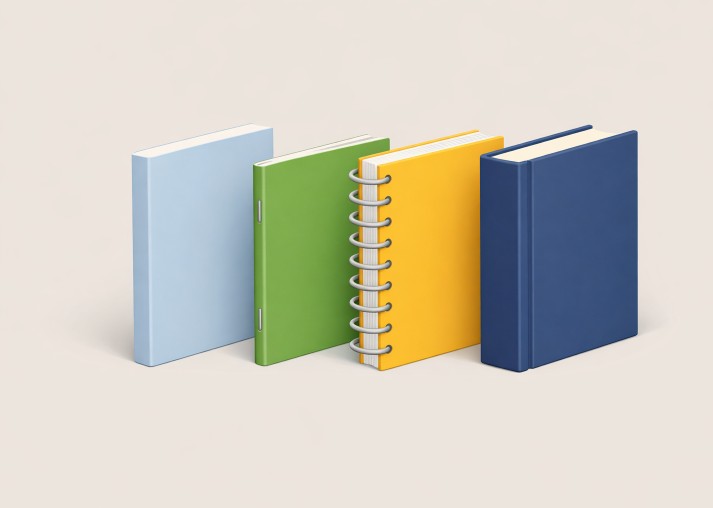
Perfect binding is achieved by gluing the pages and the cover together at the spine using a strong, flexible adhesive. This technique is frequently used for softcover books, magazines, and thicker catalogs. Perfect binding is valued for its sleek, professional finish and cost efficiency, especially for substantial print runs. However, books with this binding usually do not lie completely flat, which may be a consideration for reference or instructional materials.
Saddle Stitching
Saddle stitching uses wire staples to secure folded sheets at the spine. Ideal for books and brochures with a lower page count, typically fewer than 64 pages, saddle stitching is a budget-friendly solution that provides easy reading. Despite its affordability, this method offers less durability, making it best for short-term or lightweight publications.
Spiral Binding
Spiral binding (or coil binding) involves threading a plastic or metal spiral through holes punched along the book’s edge. The chief advantage of this method is that the book can lie flat and easily rotate 360 degrees, which is particularly useful for manuals, cookbooks, and notebooks. While functional and practical, spiral binding can lend a less formal appearance to finished books.
Hardcover (Case Binding)
Hardcover, or case binding, attaches printed pages to a sturdy, rigid cover for maximum protection and a refined look. Commonly used for premium works such as photo albums, archival texts, and collectors’ editions, hardcover binding offers superior durability. While it is the most expensive option, it delivers unmatched durability and prestige.
Factors to Consider When Choosing Binding
Several considerations can help you determine the best binding method for your book:
- Page Count: Fewer pages (under 64) usually suit saddle stitching, while longer books benefit from perfect binding or case binding.
- Durability: Books that will be referenced or handled frequently, such as training manuals or textbooks, should use durable options like hardcover or spiral binding.
- Budget: Saddle stitching and perfect binding are the most budget-friendly. Hardcover binding requires a higher investment but offers a premium finish.
- Purpose and Audience: The book’s function and readers matter. High-end coffee table books usually merit hardcover binding, while practical guides or workbooks often benefit from spiral binding for easier handling.
Additional guidance on book publishing techniques and industry standards can be found through reputable sources such as The New York Times, which provides context on longstanding practices and new trends.
Working with Professional Printers
Working with professional printers provides valuable guidance when selecting the most suitable binding option for your project. Their experience allows you to examine physical samples, compare different binding methods, and better understand how each choice affects durability, presentation, and usability. By discussing important details such as page count, paper stock, cover style, intended use, and overall finish, you can create a final product that balances visual appeal with practical function. Experienced printers can also recommend enhancements such as lamination, embossing, foil stamping, custom cover treatments, and specialty finishes that elevate your book’s appearance. Seeking expert feedback early helps prevent costly mistakes, streamline production, and ensure a smoother, more efficient printing experience.
Conclusion
Selecting the right binding method is crucial for bringing a book project to life with both quality and purpose. Each binding option offers distinct advantages, making it important to evaluate factors such as the book’s intended use, expected handling, page count, design preferences, production timeline, and overall budget. Durability may be essential for frequently used manuals or educational materials, while visual presentation may take priority for portfolios, novels, or commemorative publications. Taking time to compare available options helps ensure the final choice supports both practical needs and creative goals. A thoughtfully selected binding enhances readability, presentation, longevity, and the overall experience readers will remember.
